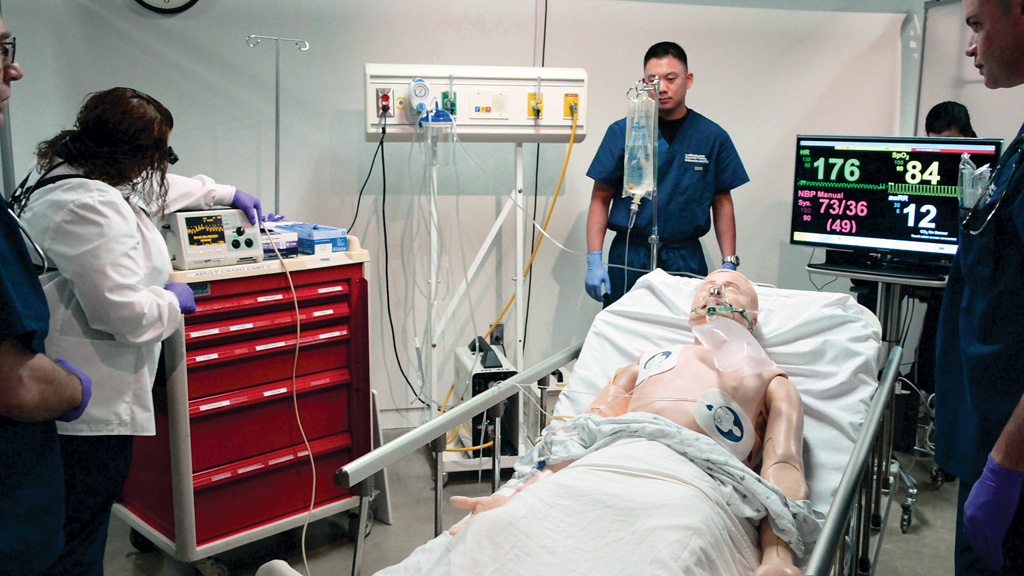
Medicine is rapidly evolving. Advances in medical technology, diagnostics, and patient-care models are pushing the boundaries of what was possible just a few years ago. With these changes, patient safety, diagnostic accuracy, and ethical use are more central than ever. Below, you’ll find a detailed look at the most important trends, tools, challenges, and impacts reshaping medicine in 2025.
Table of Contents
- Diagnostic Accuracy and AI
- Remote Patient Monitoring & Wearables
- Digital Health Records & Automation
- Robotics, AR/VR, and Surgery
- Medical Large Language Models (Med-LLMs)
- Ethics, Privacy, and Regulatory Landscapes
- Patient Safety Protocols & Implementation Challenges
- Future Directions
1. Diagnostic Accuracy and AI
What’s New
- Artificial intelligence (AI) and machine learning (ML) are being used to detect diseases earlier and more precisely—such as heart disease, cancers, and neurological disorders. ML algorithms can analyze medical imaging (like CT, MRI, X-ray) with high sensitivity, spotting patterns invisible to the human eye.
- Studies show that accurate diagnosis directly improves treatment efficacy, reduces unnecessary procedures, lowers adverse outcomes, and increases patient safety. Diagnostic errors are a major cause of harm in healthcare.
How It Works
- AI tools using deep neural networks are trained on large datasets of images and patient histories to learn what disease signatures look like.
- Algorithms can assist doctors in risk stratification — e.g. determining which patients are at higher risk and require more aggressive interventions.
- Tools are also being developed to reduce cognitive bias in physicians, standardize diagnostic procedures, and integrate checklists and decision supports.
Examples / Applications
- AI-enabled stethoscopes that capture both heart sounds and ECG to detect heart valve disease, atrial fibrillation, heart failure in seconds. They allow quicker detection in primary care settings.
- Systems like those generating “simulated MRI” from CT scans for specific conditions (e.g. in pancreatitis) to reduce the need for expensive or less accessible imaging.
2. Remote Patient Monitoring & Wearables
Current State
- Remote patient monitoring (RPM) is becoming mainstream for chronic disease management, post-operative care, elder care, and even acute illness tracking.
- Wearable sensors, smart devices, and Internet of Things (IoT) systems collect continuous physiological data (heart rate, blood oxygen, glucose, respiration, etc.).
Benefits
- Early detection of deteriorations; fewer emergency visits and readmissions.
- Greater patient engagement and adherence to treatment plans when feedback is real-time.
- Especially useful in rural, underserved, or resource-limited settings.
Challenges
- Data reliability (sensor accuracy, calibration).
- Need for secure and robust communication infrastructure.
- Integration with clinical workflow so that data doesn’t overwhelm providers.
3. Digital Health Records & Automation
Electronic Health Records (EHR) & Health Information Technology
- EHR systems reduce medication errors, improve adherence to clinical guidelines, and reduce adverse drug reactions.
- Digital workflows standardize processes, improving efficiency and reducing variation.
Automated Documentation & Medical Scribes
- Generative AI is being used to transcribe and summarise patient-clinician interactions (SOAP/BIRP notes etc.), lightening administrative burden.
- Automated medical scribes help clinicians by generating draft documentation, which can then be reviewed, reducing time spent on paperwork.
4. Robotics, AR/VR, and Surgery
Robot-Assisted Surgery
- Surgical robots are increasingly used for procedures requiring high precision and minimal invasiveness. They reduce complication rates, improve visualisation, and allow better motion control.
Augmented Reality (AR) / Virtual Reality (VR)
- AR/VR are being used for surgical planning, intraoperative guidance, and training. For example, overlaying imaging data over the patient during surgery helps surgeons see internal structures without large incisions.
3D Printing & Patient-Specific Models
- 3D printed anatomical models, custom surgical guides, and prosthetics help in complex cases, allowing surgeons to rehearse or plan more exactly.
5. Medical Large Language Models (Med-LLMs)
What They Are
- Med-LLMs are AI models specialized or adapted to medical tasks: diagnostics, summarization, decision support, patient education.
Key Applications
- Generating clinical decision support tools (e.g. suggesting tests or management plans).
- Translating medical-level content into patient-friendly language.
- Assisting in medical education or research, summarizing literature or helping with literature search.
Trustworthiness & Limitations
- Ensuring fairness, avoiding bias in training data is essential.
- Accuracy and clarity: models must be validated in real clinical settings.
- Privacy: managing sensitive health data carefully.
6. Ethics, Privacy, and Regulatory Landscapes
Data Privacy & Security
- As more tools collect personal and physiological data, risk of data breaches increases. Encryption, secure transmission, and rigorous data governance are critical.
Ethical Use of AI
- Bias: datasets that underrepresent certain populations can produce poor outcomes for those groups.
- Transparency: tools should be explainable; clinicians and patients should understand how decisions are made.
- Accountability: who is responsible if an AI makes or suggests an error?
Regulation
- Many countries are framing regulations around medical devices, AI tools, software as medical devices (SaMD).
- Clinical trials and real-world evidence are essential for approval and adoption of new medical technologies.
7. Patient Safety Protocols & Implementation Challenges
Safety Protocols
- Standardizing workflows: checklists, protocols to prevent surgery errors, medication errors, diagnostic delays.
- Training of clinicians on new tools and technology: ensuring competence, continuous education.
Challenges in Implementation
- Resistance to change: practitioners may distrust or be slow to adopt new tools.
- Infrastructure gaps: hospitals and clinics may lack connectivity, hardware, or trained staff.
- Cost: technologies can be expensive to procure and maintain.
8. Future Directions
- Wider use of personalized medicine: integrating genomics, lifestyle, and environment to tailor treatments more precisely.
- Growth of telemedicine blended with AI assistance: virtual care with decision support.
- Emerging technologies like graph neural networks to connect different data types (patient history, genetic, imaging, lifestyle) for better predictions.
- More robust frameworks for ethics, regulation to keep pace with innovation.
- Emphasis on global health equity: making advanced medical technology accessible in low- and middle-income regions.
FAQ (Frequently Asked Questions)
1. What is the greatest benefit of using AI in diagnostics?
AI improves diagnostic accuracy, can detect disease earlier, reduce unnecessary procedures, and improve patient safety by reducing human error and cognitive bias.
2. Are wearable devices reliable enough for medical decision making?
Many wearables are accurate for certain parameters (heart rate, oxygen saturation). However, accuracy can vary, and for critical decisions, devices often need clinical validation and calibration.
3. How do medical large language models differ from general AI models?
Med-LLMs are specialized: they are trained or fine-tuned on medical data, literature, patient histories, clinical scenarios, making them more accurate and relevant to healthcare tasks, whereas general models may lack domain-specific nuance.
4. What ethical concerns come with AI in healthcare?
Key concerns include bias, privacy violations, transparency of decision-making, potential misuse of patient data, and liability when AI is involved in clinical decisions.
5. How do regulations catch up with fast-moving medical technology?
Regulatory bodies are creating frameworks specifically for software as a medical device, AI tool validation, ethical standards. Adoption of real-world evidence, post-market surveillance, and international cooperation are helping.
6. Can remote patient monitoring replace traditional hospital care?
Not entirely. RPM is complementary: it’s great for chronic disease, follow-ups, early detection, but acute emergencies, surgeries, and procedures still need in-person care.
7. What are the biggest barriers to implementing advanced medical technologies in low-resource settings?
Cost, lack of infrastructure (internet, reliable power), shortage of trained personnel, regulatory and supply chain challenges, as well as affordability for patients.
